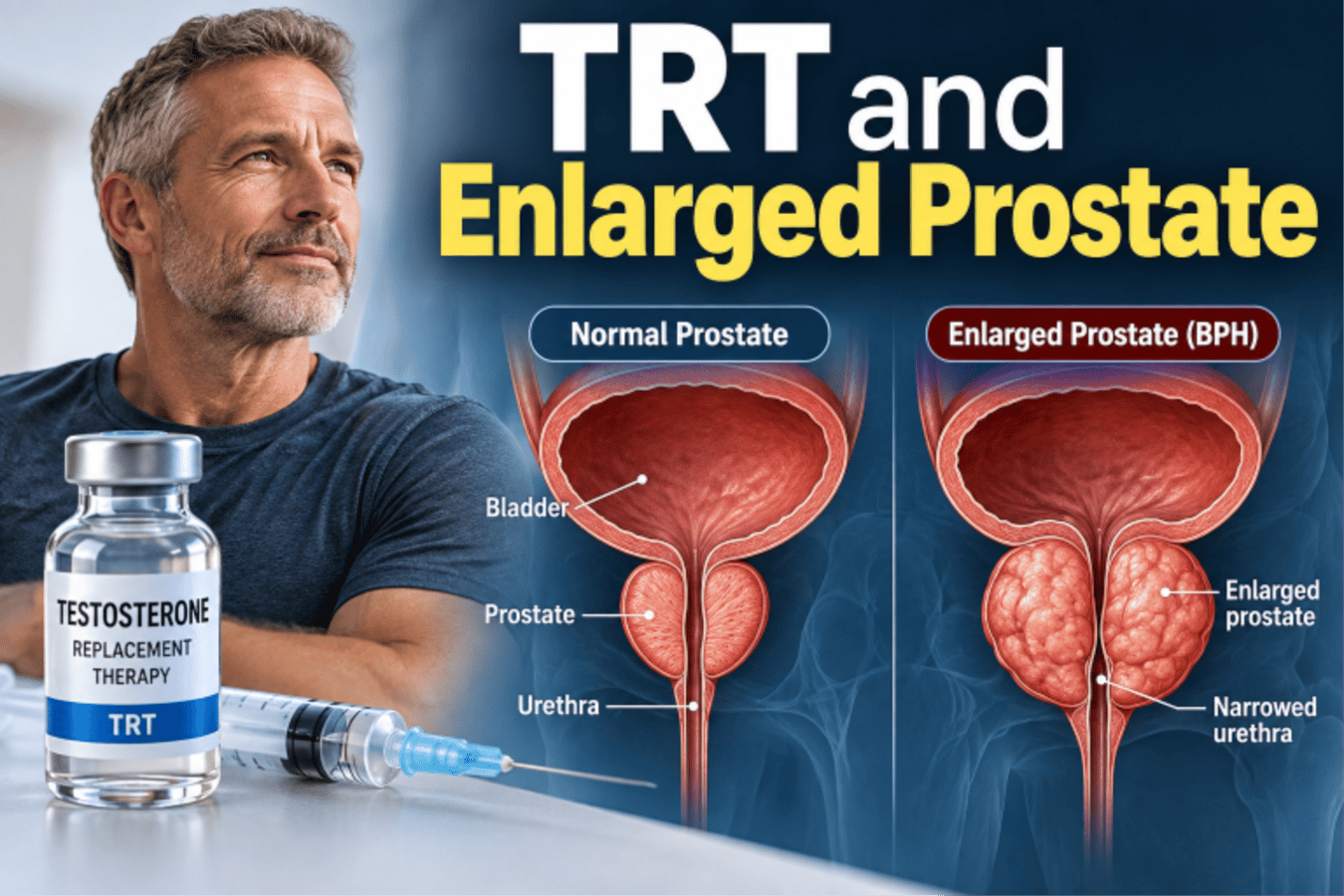
Men considering testosterone replacement therapy often ask whether TRT can worsen an enlarged prostate. The concern is understandable because benign prostatic hyperplasia, or BPH, becomes more common with age and can cause urinary symptoms such as a weak stream, urgency, frequent urination, or waking at night to urinate.
Quick answer: TRT does not automatically mean an enlarged prostate will become a problem, but urinary symptoms and prostate history should be reviewed before treatment. True Test starts with the $49 Full Story so a licensed provider can review 50+ biomarkers, an InBody 380 scan, your symptoms, prior PSA results, and medical history before deciding whether hormone optimization for men is appropriate.
What BPH Actually Means
BPH is a noncancerous enlargement of the prostate. As the prostate grows, it can press on the urethra and affect urine flow. Common symptoms include a weak stream, difficulty starting urination, dribbling, urgency, frequency, and waking several times at night to urinate.
These symptoms are not specific to BPH. Urinary infection, bladder problems, prostatitis, medication effects, and other conditions can produce similar complaints. That is why a symptom pattern should be evaluated rather than assumed to be caused by one condition.
Why Prostate Symptoms Matter Before TRT
Before testosterone therapy begins, the provider needs to know whether there are existing urinary symptoms, prior prostate procedures, a history of prostatitis, family history of prostate cancer, or previous PSA abnormalities. Severe lower urinary tract symptoms can affect how testosterone treatment is approached.
True Test’s deep-dive lab evaluation gives the provider more context than a testosterone value alone. The current approach can include total testosterone, free testosterone, SHBG, estradiol, hemoglobin, hematocrit, PSA where appropriate, thyroid, metabolic, and other health markers.
PSA and BPH Are Related but Not the Same
PSA is a protein produced by prostate tissue. A higher PSA does not automatically mean prostate cancer, and a man with BPH may have a higher PSA because there is more prostate tissue producing the protein. Inflammation, urinary infection, and recent prostate procedures can also affect the result.
For men in whom PSA screening is appropriate, having a baseline before TRT can make future changes easier to interpret. A provider can then compare trends rather than react to one isolated value.
Can TRT Make Urinary Symptoms Worse?
The answer is not the same for every patient. Testosterone can affect prostate tissue, but urinary symptoms depend on more than hormone levels alone. The severity of BPH, bladder function, age, medications, sleep, fluid intake, and other health factors can all influence symptoms.
A man who already has significant urinary difficulty should not simply start testosterone and hope for the best. The symptoms should be documented, the prostate history reviewed, and any concerning findings evaluated before treatment.
What True Test Reviews During Treatment
Hormone optimization should not stop at the prescription. True Test uses follow-up testing during optimization so the provider can review treatment response together with safety markers and new symptoms.
If urinary frequency, weak stream, urgency, nighttime urination, pelvic discomfort, or a PSA change appears during treatment, the provider can decide whether the issue needs repeat testing, a medication review, a change in the TRT plan, or referral to urology.
That broader monitoring process is part of True Test’s Hormone Optimization for Men approach: treatment decisions are based on symptoms, labs, response, and safety rather than simply aiming for a higher testosterone number.
When Urology May Need to Be Involved
A hormone provider does not replace a urologist. Men with concerning PSA changes, blood in the urine, recurrent urinary retention, severe lower urinary tract symptoms, an abnormal prostate examination, or other concerning findings may need specialist evaluation.
The goal is not to create fear around prostate monitoring. It is to make sure a prostate-related issue is identified and evaluated before it is blamed on TRT or overlooked.
What to Bring to Your True Test Visit
Bring prior PSA results, a list of current medications and supplements, any history of prostate infection or procedures, and a short note about your urinary symptoms. It can help to record how often you wake at night, whether the stream has weakened, whether urgency is new, and whether symptoms changed after starting or changing treatment.
A licensed True Test provider can then connect those details with your hormone and safety labs and explain whether TRT is appropriate, whether monitoring should change, or whether urology should be involved.
Frequently Asked Questions
Does TRT cause an enlarged prostate?
TRT does not automatically cause clinically significant BPH in every man. Prostate size, urinary symptoms, age, baseline risk, and individual response all matter. A provider should review symptoms before and during treatment.
Can I start TRT if I already have BPH?
Possibly, but the decision depends on the severity of urinary symptoms, prostate history, PSA screening when appropriate, and the broader clinical picture. Severe or unexplained symptoms should be evaluated first.
Does a high PSA mean I have prostate cancer?
No. PSA can rise for several noncancer reasons, including BPH and prostate inflammation. An abnormal result may need repeat testing or urology evaluation, but PSA alone is not a diagnosis.
What urinary symptoms should I report while on TRT?
Report a weaker stream, trouble starting urination, urgency, frequent urination, repeated nighttime urination, pain with urination, blood in the urine, or any major new change in urinary habits.
Does True Test monitor prostate health during TRT?
True Test can include PSA where clinically appropriate and reviews prostate-related symptoms as part of a broader men’s hormone and safety assessment. The exact testing plan is personalized to age, history, symptoms, and risk.
Next step: If you are considering TRT and already have BPH, urinary symptoms, or questions about prostate health, start with True Test’s $49 Full Story for 50+ biomarker labs, an InBody 380 scan, and a 45-minute licensed provider review. Learn more about Hormone Optimization for Men, find the True Test clinic nearest you, and book your first visit with any prior PSA or urology records ready for review.