A lower scale number can feel like the main goal of a weight loss program, but it does not show what the body is losing. At True Test, body composition tracking is built into medical weight loss because losing fat while preserving muscle can matter just as much as the total number of pounds lost.
Quick answer: An InBody 380 scan uses bioelectrical impedance to estimate body composition, including body fat, skeletal muscle, and body water. One scan is only an estimate, but repeated scans under similar conditions can reveal useful trends. True Test includes monthly InBody 380 scans in its medical weight loss program so providers can review progress alongside labs, symptoms, nutrition, activity, and treatment response.
Why the Scale Falls Short
Scale weight combines everything in the body into one number. Fat, muscle, bone, organs, food in the digestive tract, and body water all contribute.
That means a two-pound change can have different meanings. It could reflect fat loss, reduced water, loss of lean tissue, or a mixture. True Test uses body composition data to give patients and providers more context than scale weight alone.
What InBody Measures
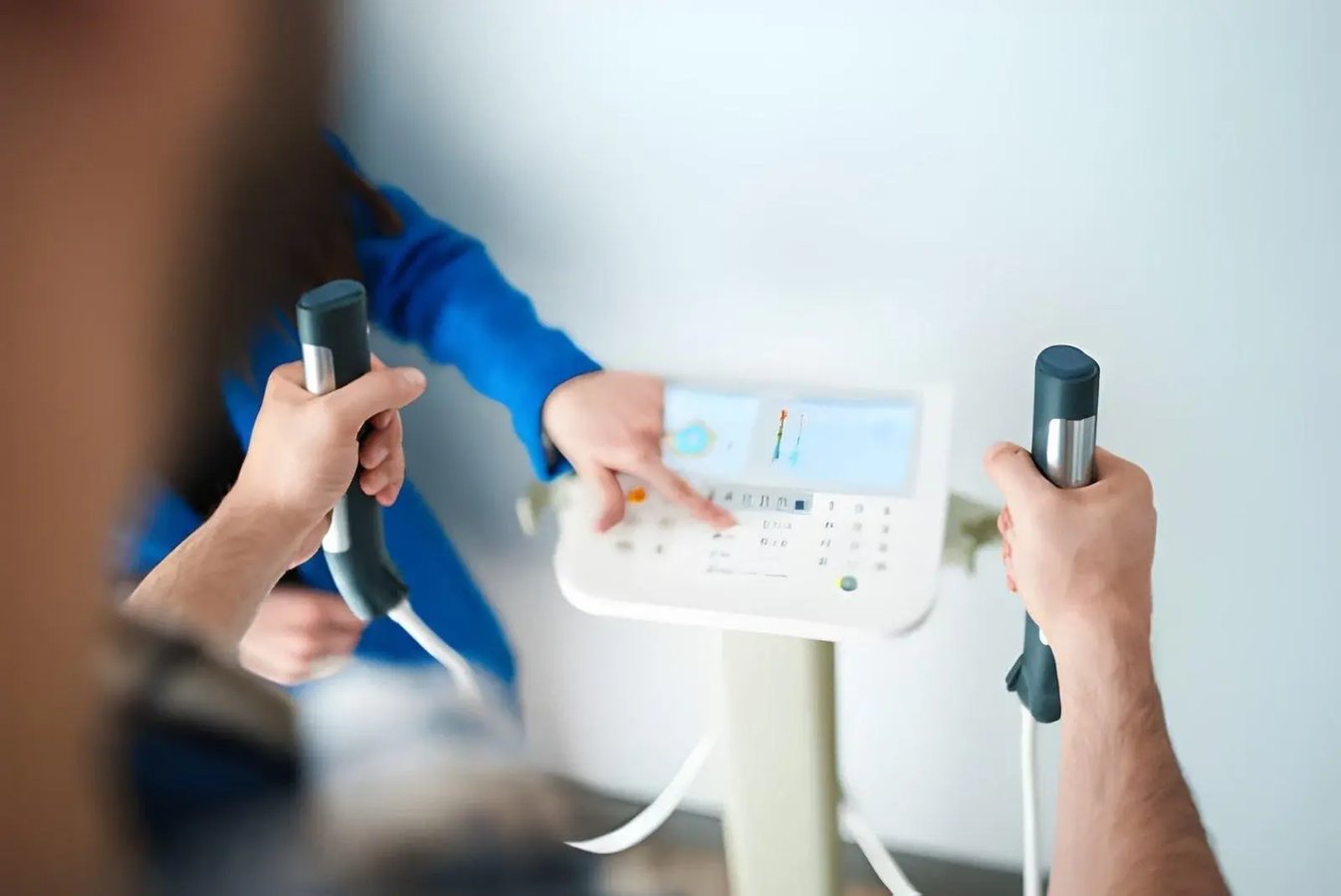
InBody devices use bioelectrical impedance analysis, or BIA. A very small electrical current passes through the body, and the device uses measured resistance and reactance to estimate body water and body composition.
The output can include body weight, skeletal muscle mass, body fat mass, percent body fat, visceral fat, and water-related measures. At True Test, these results become part of the baseline used to track what changes as a medical weight loss plan progresses.
Why Muscle Matters
Weight loss can include both fat and lean tissue. Preserving muscle supports strength, mobility, training performance, and everyday function.
This is especially relevant when appetite is reduced by GLP-1 medications. If a patient is eating much less, protein intake and resistance training may also decline unless they are intentionally addressed. True Test’s monthly InBody tracking can help flag changes in muscle so the provider can review nutrition, activity, treatment tolerance, and the pace of weight loss.
Track the Trend
Bioelectrical impedance is affected by hydration and testing conditions. Food intake, exercise, body position, and recent fluid changes can influence the estimate.
For that reason, one unusual result should not trigger a drastic change. True Test uses repeated monthly InBody 380 scans so the focus stays on the trend. When scans are done under similar conditions, they can help show whether body fat is moving down while muscle is being maintained.
When the Scale Stalls
Imagine the scale barely changes over a month, but waist circumference decreases and the InBody trend suggests body fat is down while muscle is stable. That may still represent meaningful progress.
The opposite can also happen. A large drop in scale weight paired with declining strength and a sharp drop in lean mass may be a reason to review nutrition, training, medication tolerance, or the pace of weight loss. True Test providers can use these trends to decide what questions need to be asked next.
Keep Scans Consistent
For better comparisons, try to repeat scans at a similar time of day and under similar hydration and eating conditions. Follow the clinic’s preparation instructions and tell the team about unusually intense exercise, dehydration, illness, or other factors that might change body water.
Consistency will not make BIA perfect, but it makes serial measurements more useful for both you and your provider.
Look Beyond One Number
Body composition should not become another single number to chase. Waist circumference, clothing fit, strength, energy, blood pressure, laboratory markers, and how well the plan is tolerated may all matter depending on your goals.
True Test combines these measures rather than allowing the scale or one scan to define success. The purpose is to understand whether the plan is moving you toward better body composition and overall health.
How True Test Uses InBody
True Test’s medical weight loss program pairs monthly InBody 380 scans with comprehensive lab work, licensed provider review, medication when clinically appropriate, and ongoing support. The program may include GLP-1 medications, peptides, or other options depending on the individual’s labs, history, and goals.
Every patient can start with the $49 Full Story, which includes a 50+ biomarker panel, a baseline InBody 380 scan, and a 45-minute provider review. From there, the provider can explain what your numbers show and whether a medical weight loss plan is appropriate. The scan is a monitoring tool, not a diagnosis or a guarantee of a specific result.
Frequently Asked Questions
What does an InBody scan measure?
It estimates body composition using bioelectrical impedance, including measures related to body fat, lean mass, and body water.
Is an InBody scan perfectly accurate?
No. It is an estimate, and hydration and other testing conditions can affect the result. Trends are generally more useful than overinterpreting one scan.
Why is muscle tracking important during weight loss?
Maintaining muscle supports strength and function. Weight loss can include lean tissue, so tracking can help identify when nutrition or resistance training needs review.
How often should InBody scans be repeated?
Frequency depends on the program. True Test’s medical weight loss program includes an InBody 380 scan every month so changes in fat, muscle, and water can be followed over time.
Can the scale stay the same while body fat decreases?
Yes. Water shifts and changes in lean mass can mask fat loss on the scale. Waist and body composition trends can add context.
Should I change my treatment based on one scan?
Usually not. One scan should be interpreted alongside the trend, symptoms, nutrition, activity, labs, and treatment response. True Test providers use the broader picture before recommending changes.
Next step: If you want a weight loss plan that tracks more than the scale, start with True Test’s $49 Full Story: 50+ biomarker labs, a baseline InBody 380 scan, and a 45-minute review with a licensed provider. Explore True Test Medical Weight Loss, find the clinic nearest you, and book your first visit to see what your weight, body composition, and lab results show together.